AI Employees vs. RPA: The End of Robotic Process Automation
Freemi Team
Head of AI Research
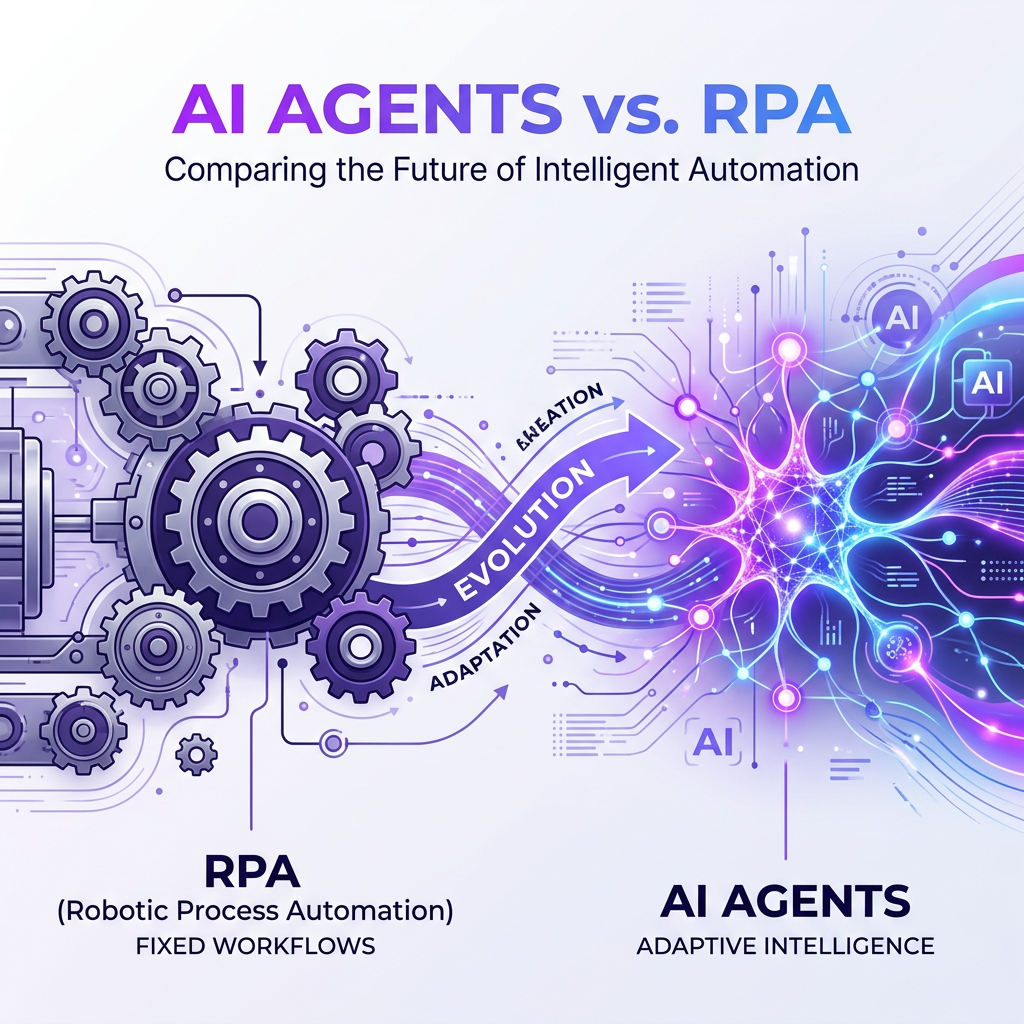
RPA Had Its Moment
Robotic Process Automation was revolutionary when it arrived. For the first time, businesses could automate repetitive digital tasks without rewriting entire systems. Click here, copy that, paste there.
But RPA has a fatal flaw: it's brittle.
Change a button's position, update a form field, or modify a workflow, and the entire automation breaks. RPA bots follow scripts. They can't adapt.
The Adaptation Gap
RPA Approach
Record a human performing the task
Create a script that replicates those exact steps
Run the script on a schedule
When something changes, the script breaks
A developer fixes the script
Repeat steps 4-5 indefinitely
AI Employee Approach
Define the goal ("qualify this lead")
Give the agent access to the necessary tools
The agent figures out how to achieve the goal
When something changes, the agent adapts automatically
The goal stays the same; the method evolves
Why Enterprises Are Switching
Maintenance Costs
RPA maintenance typically consumes 30-40% of the initial implementation cost annually. AI employees are self-maintaining because they reason about goals, not steps.
Flexibility
RPA breaks when processes change. AI employees thrive on change because they understand intent, not just mechanics.
Scope
RPA handles structured, repetitive tasks. AI employees handle unstructured work like email composition, decision-making, and multi-step reasoning.
Intelligence
RPA executes. AI employees think. The difference is the ability to handle exceptions, make judgment calls, and improve over time.
The Migration Path
If you have existing RPA deployments, here's how to transition:
Catalog your RPA bots and their functions
Prioritize by fragility. which bots break most often?
Replace the most fragile bots first with AI employees
Measure the maintenance reduction
Expand gradually until all bots are replaced
The Bottom Line
RPA was the bridge between manual work and intelligent automation. AI employees are the destination. The companies still investing heavily in RPA are building on a foundation that's already shifting.
The question isn't whether to transition. It's how fast.