The AI Onboarding Playbook: From Day 1 to Full Autonomy
Marcus Reid
Senior Solutions Architect
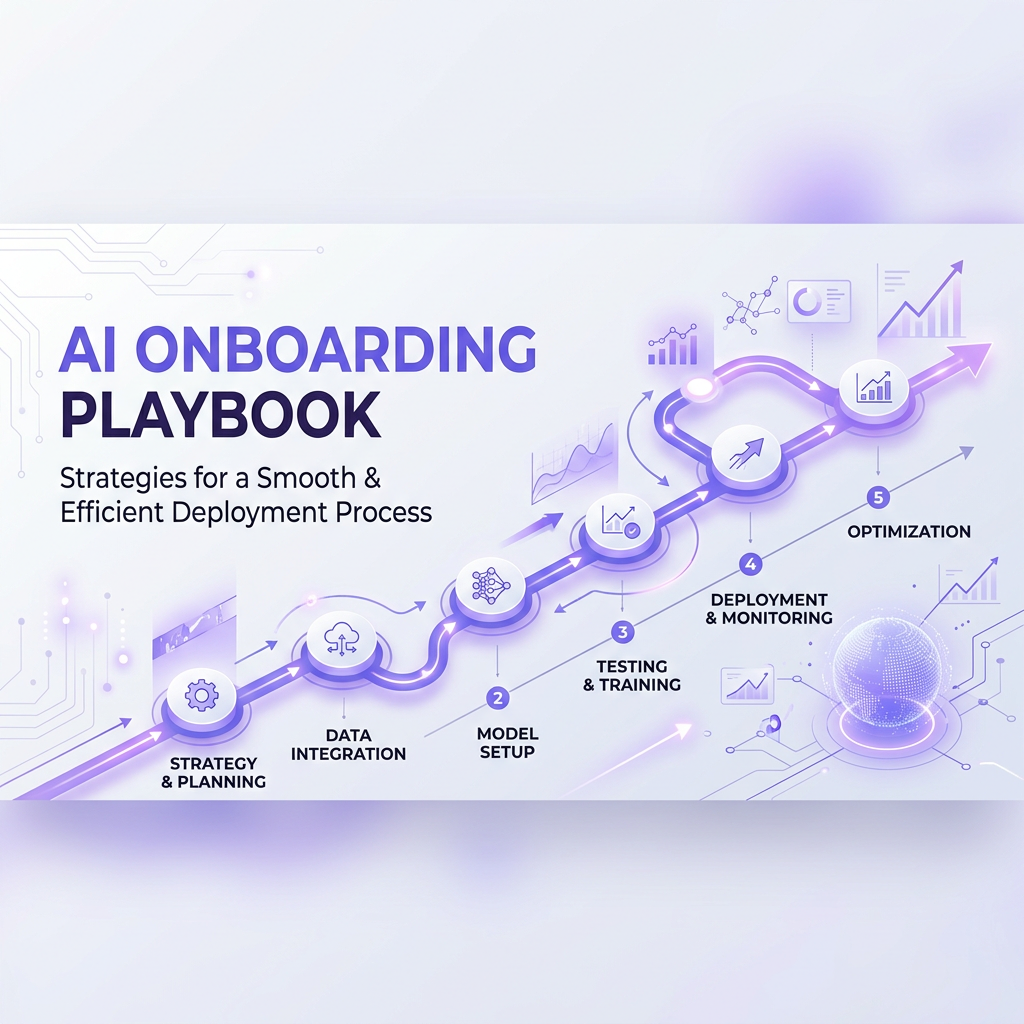
The First 7 Days Matter Most
Deploying an AI employee isn't like installing software. It's closer to onboarding a new hire. The first week sets the foundation for everything that follows.
Get it right, and your operator reaches full autonomy within days. Get it wrong, and you'll spend weeks debugging workflows that should have been simple.
Day 1: Define the Mission
Every operator needs a clear mission. Not "help with sales" but "qualify inbound leads from the website contact form, enrich them with company data, and route qualified leads to the sales team within 5 minutes."
Specificity is everything. The more precise your mission, the faster your operator reaches autonomy.
What to Prepare
A list of 3-5 workflows the operator will handle
Access credentials for the tools it needs (CRM, email, calendar)
Examples of "good" outputs for each workflow
Escalation rules for edge cases
Day 2-3: Connect and Configure
This is where your operator gets its tools. Connect your:
Communication channels (email, Slack, chat)
Data sources (CRM, analytics, databases)
Action tools (calendar, project management, billing)
Each connection takes about 2 minutes with OAuth. The operator immediately starts understanding your data landscape.
Day 4-5: Supervised Mode
Your operator processes real work, but every action gets reviewed before execution. This is the critical learning phase.
Review the first 20-30 outputs carefully
Flag anything that doesn't match your expectations
The operator adjusts its reasoning based on your feedback
Most teams find that by output 15-20, accuracy exceeds 90%.
Day 6-7: Autonomy Graduation
Once you're confident in the quality, switch to autonomous mode with monitoring. The operator handles work independently, and you receive:
Daily summary reports
Escalation alerts for unusual situations
Weekly performance metrics
Common Mistakes to Avoid
Skipping the mission definition. Vague instructions produce vague results.
Connecting too many tools at once. Start with 2-3, add more after the first week.
Not reviewing supervised outputs. This is where the operator learns your standards.
Expecting perfection on day one. Like any new hire, there's a learning curve.
The 30-Day Benchmark
By day 30, a well-onboarded operator should be:
Handling 80%+ of assigned workflows without intervention
Maintaining 95%+ accuracy on routine tasks
Saving your team 15-20 hours per week minimum
Identifying optimization opportunities you hadn't considered